
Project Overview
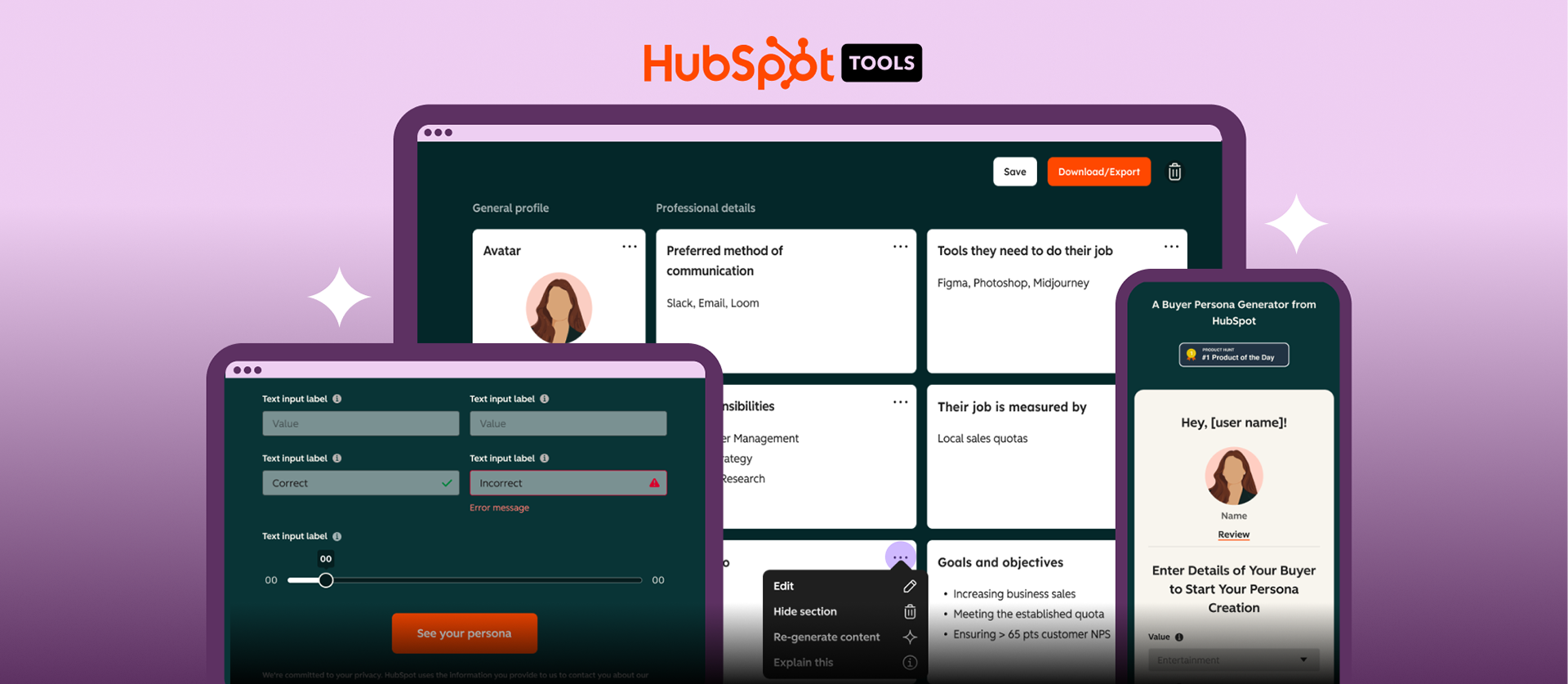
The Objective: Evolve HubSpot’s “Make My Persona” high-traffic web tool to help marketers build data-driven buyer profiles through a seamless, AI-guided experience.
The Challenge: Redesign a legacy solution into a modern, interactive experience that simplifies complex audience research and drives growth while maintaining demand.
My Role: Lead UX Designer; responsible for the end-to-end design strategy, interactive flow optimization, and aligning with the new HubSpot global rebrand.
The Process: Introduced an optimized flow framework that breaks down intimidating research tasks into simple, engaging steps, drastically reducing user drop-off during the data-entry phase.
The Impact: Established a mobile-first, AI-guided framework designed to accelerate time-to-value, increase user confidence in results, that drive high-intent lead generation.
The Deep Dive
Persona Builder App: Scaling high-intent lead generation through an AI-guided freemium experience.
Pivoting a legacy tool from manual data entry to an Al-assisted "co-pilot" to increase user confidence and completion rates.
Role: Lead Product Designer
Company: Hubspot (2025)
Scope: Product Design, UX, Design Strategy, Mobile-First Design, AI/LLM UX, Growth & Acquisition Marketing
Partners: Marketing, Acquisition, Engineering, AI Solutions, QA, PM
Duration: 6 months
Company: Hubspot (2025)
Scope: Product Design, UX, Design Strategy, Mobile-First Design, AI/LLM UX, Growth & Acquisition Marketing
Partners: Marketing, Acquisition, Engineering, AI Solutions, QA, PM
Duration: 6 months

Context
The legacy Make My Persona micro app required experience optimization and design revamp to improve first-time usability and downstream business KPIs by introducing AI without sacrificing user control or trust.
The User Problem
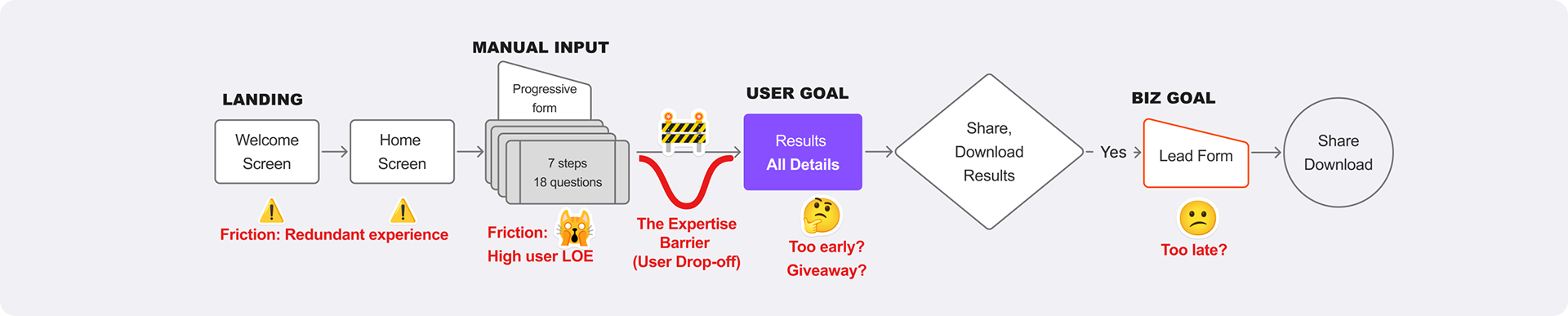
The legacy friction: high drop-off due to an expertise barrier.
Expertise barrier: Manual persona creation required extra effort and domain knowledge, causing high-intent users to abandon the flow, thus preventing from reaching a successful outcome.
Delayed time-to-value: Long legacy flow deferred product benefits until the final step, creating a "value gap" that eroded trust and reduced lead generation.
The Business Goal
Maximize first-time user success and accelerate time-to-value to increase high-intent lead generation.
The Opportunity
Bridge the legacy 'value gap' by leveraging AI guidance, accelerating time-to-first-value for users while transforming a high-traffic first touchpoint into a scalable, high-intent lead generation engine.
Role, Ownership and Scope
Leading Strategy and Execution Through Ambiguity
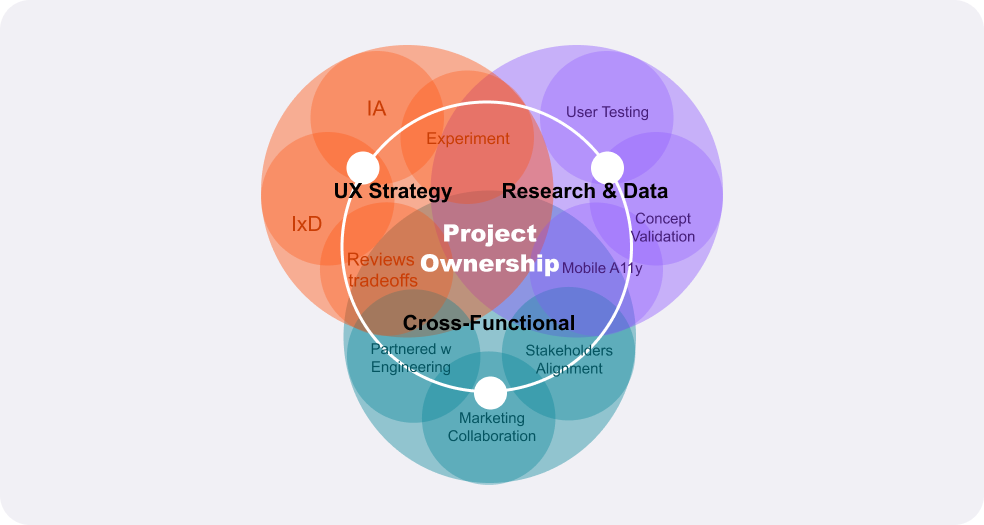
➜ Cross-functional lead designer embedded with MarTech AI Solutions, Engineering, Data Analytics, Marketing, QA and Design Ops.
➜ Owned end-to-end UX: strategy, IA, core flows, interaction model, and experimentation.
➜ Led research + concept testing to shape system-level design decisions.
➜ Partnered to define the AI mental model, validation patterns, and gating strategy.
➜ Initiated and drove the mobile-first responsive redesign experience.
➜ Aligned product owners and stakeholders through regular reviews and tradeoffs.
Constraints
➜ High-stakes AI outputs influence marketing and campaign decisions.
➜ Risk of AI overconfidence and misuse.
➜ Needed to introduce AI without removing user control or trust.
➜ Adapt legacy desktop-first frameworks into a high-performing mobile experience.
➜ Maintain parallel, non-integrated paths for legacy manual flow and AI-powered experiences.
Solution Overview
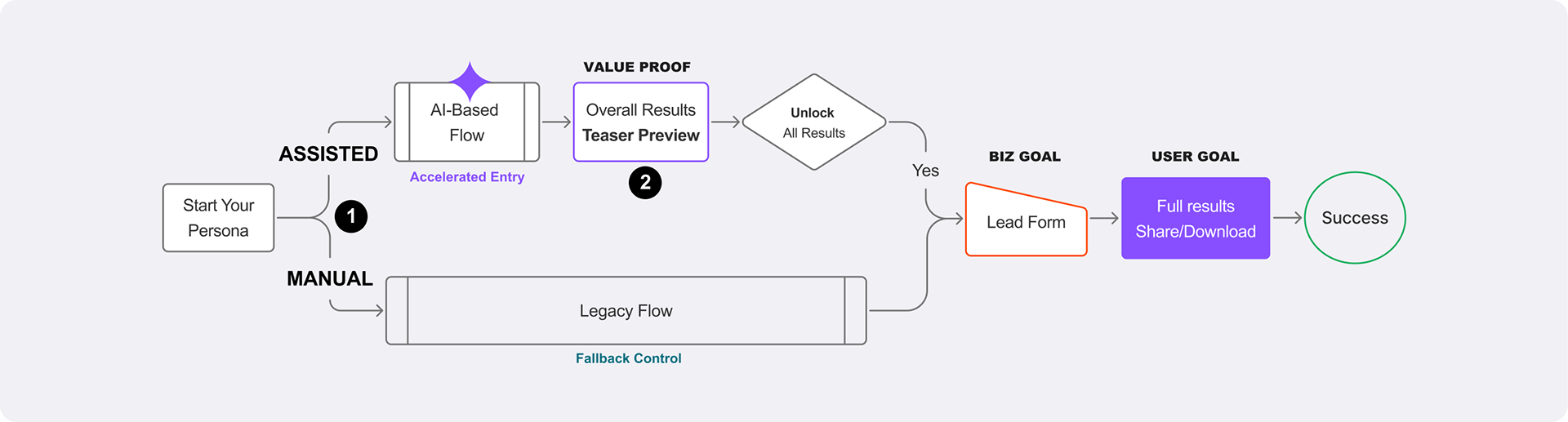
✔ Architecture: Merging Manual and AI Workflows
✔ The Risk: Al Overconfidence and misuse. Users blindly accepting hallucinations leads to bad marketing strategy.
✔ The Goal: Collaborative Agency. The mental model must be a partnership - Al proposes, User disposes. Need to introduce Al without removing user control or trust.
✔ Design Principle: Al ≠ Automation✔ The Strategic Guardrail: Al must be guided, not autopilot.
Key Design Decisions
A system built to scale across platforms and integrations.
1. The Hybrid Model: Assisted + Manual
Research insights showed 79% of users preferred AI guidance, but demanded visual structure and inputs. To satisfy that for our initial direction we chose a hybrid AI + manual system over a full chatbot experience. AI-guided inputs reduced early effort while preserving user agency.
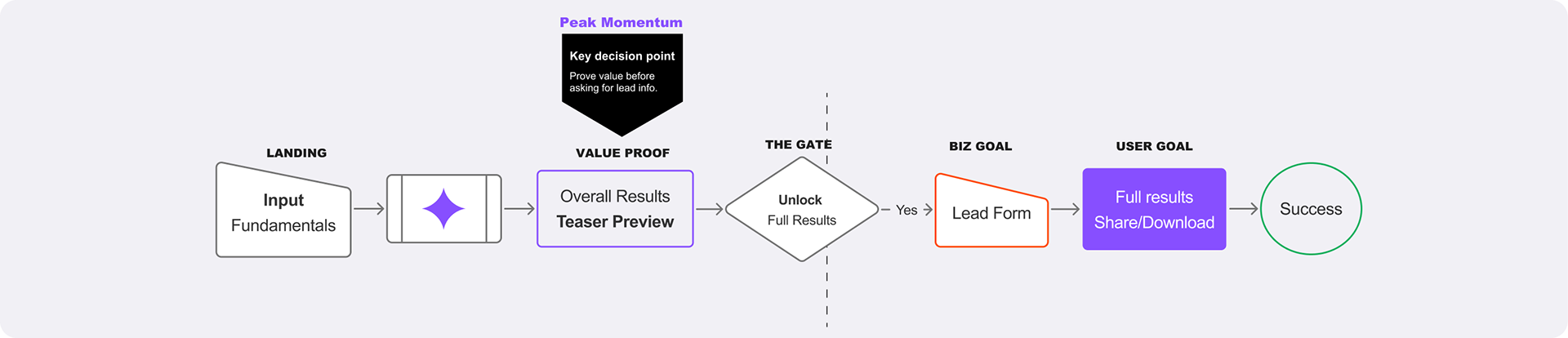
2. The 'Teaser' Value Exchange
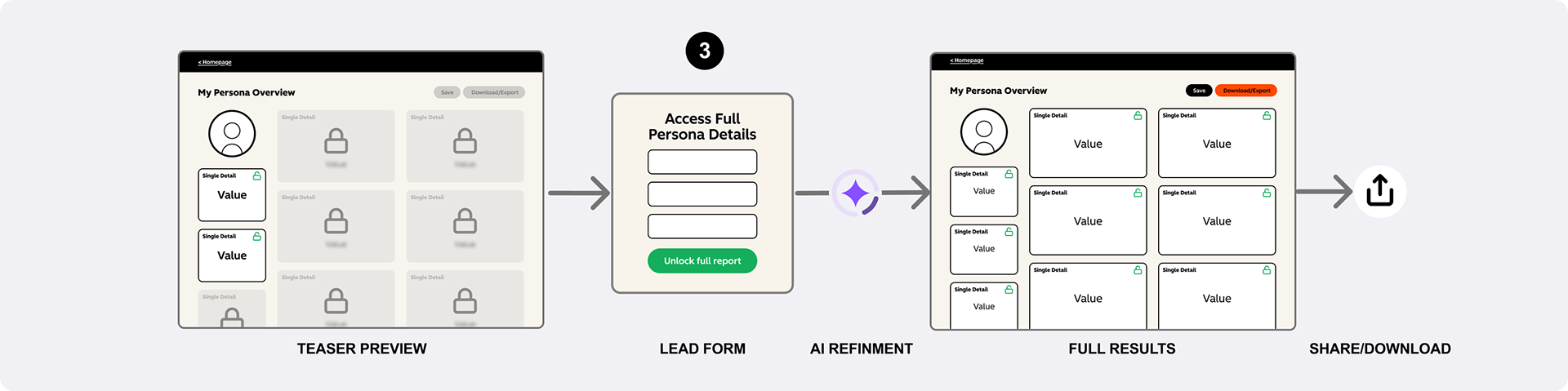
Early results preview demonstrated value before lead capture. We accepted the risk of partial value exposure before conversion.
3. Progressive Disclosure
Optimized the interaction design experience for progressive disclosure for contextual content reveal, prioritizing user flow and reach. Mitigated risk via preview scaffolding, provenance, and validation.
4. Designing for Trust: Addressing AI Hallucinations.
Trust requires explicit control. The 'Edit' and 'Regenerate' patterns allow users to override AI confidence. Validation step reduced false confidence and errors.

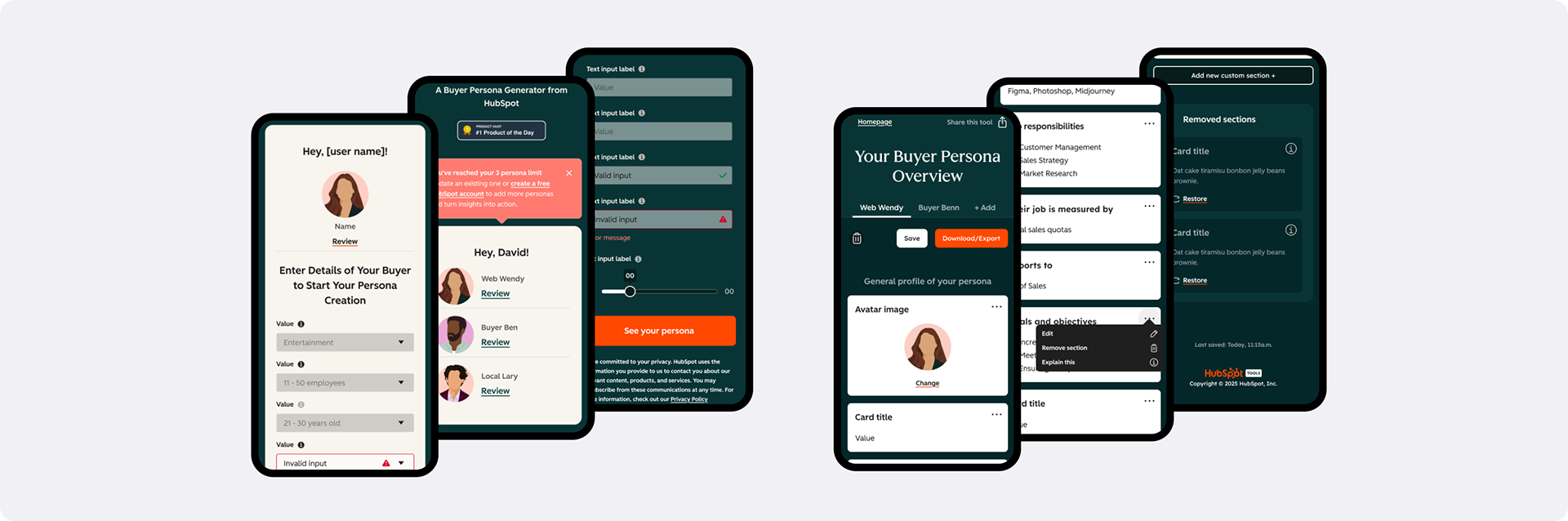
5. Mobile-First Responsiveness
I pivoted from inherited desktop patterns to prioritize mobile-first usability, which directly delivered on business goals. Designed responsive patterns for mobile-first completion. Streamlined multi-state interactions to support intuitive, personalized updates within the one-handed reach zone.
Outcomes & Impact
✔ Increased User Confidence: Structured choices stabilized persona quality by improving perceived clarity and confidence in testing.
✔ Accelerated Time-to-Value: Teaser preview strategy engaged users earlier and optimized the flow.
✔ Mobile-First Foundation: Established a responsive design system required to scale high-intent lead generation.
✔ Leadership alignment: Influenced the role of AI as guidance, not automation.
Learnings
1. Trust & Control: Users trust AI more when the ability to override it is explicit, obvious and accessible.
2. Value First, Friction Second: Early value reveal increases engagement tolerance for the lead generation gate.
3. Design for Failure Modes: The 'Happy Path' can be straightforward while the 'Hallucination Path' requires robust recovery.
Potential: Add Testing section ???
Prototype